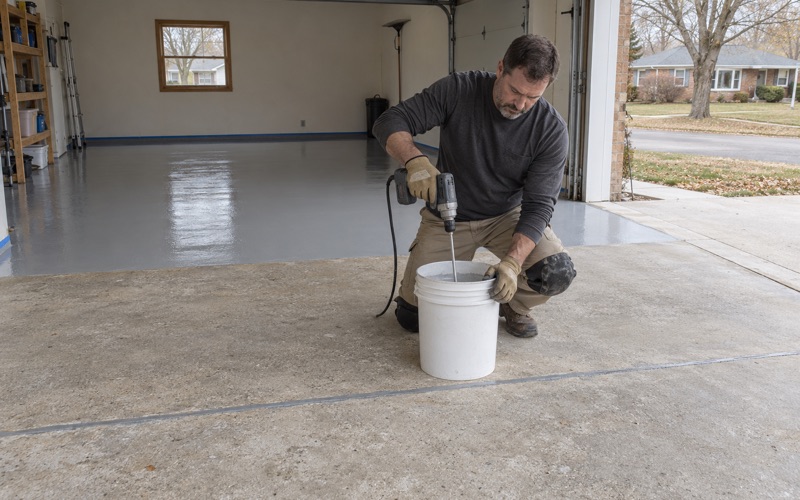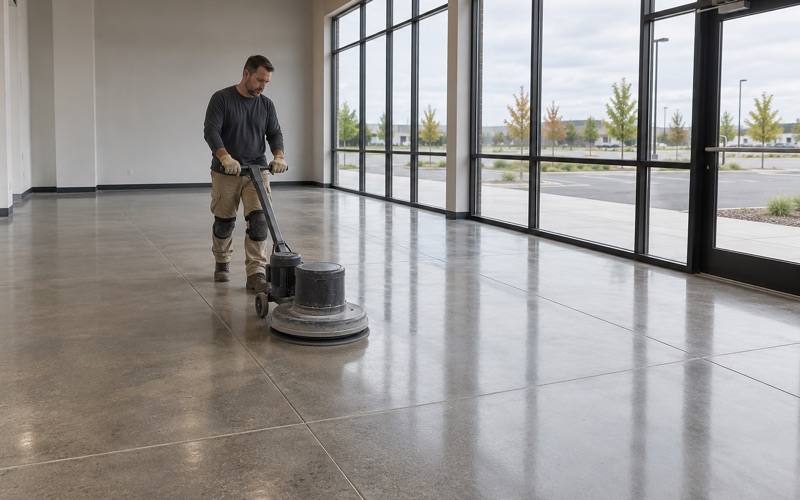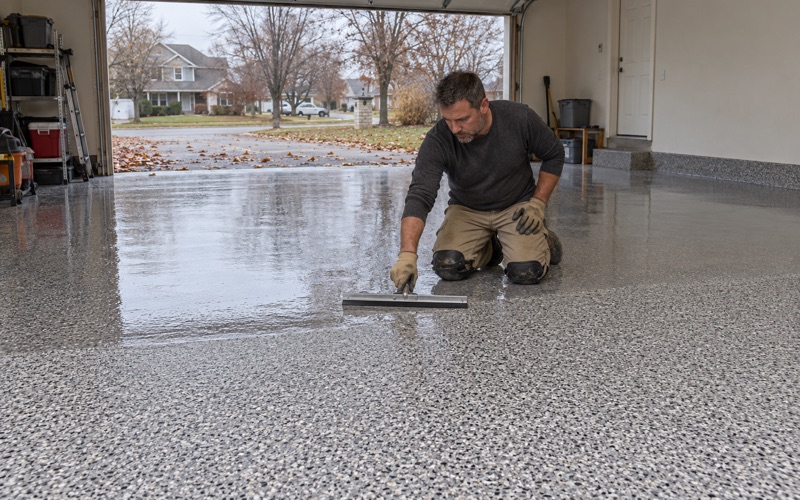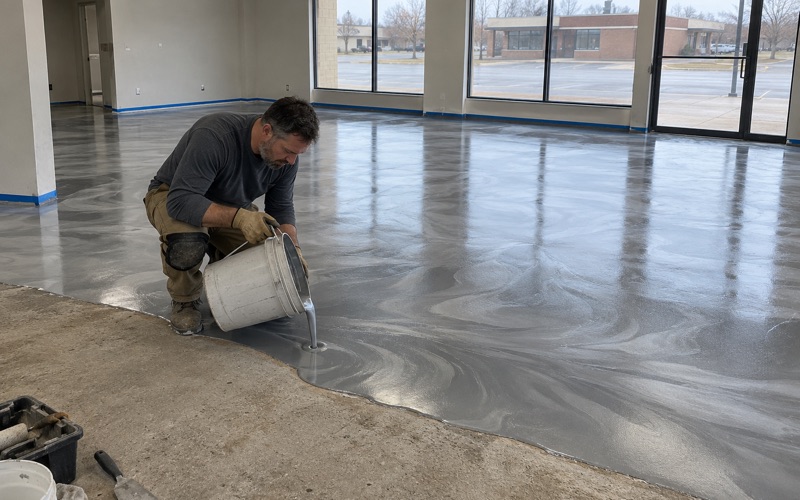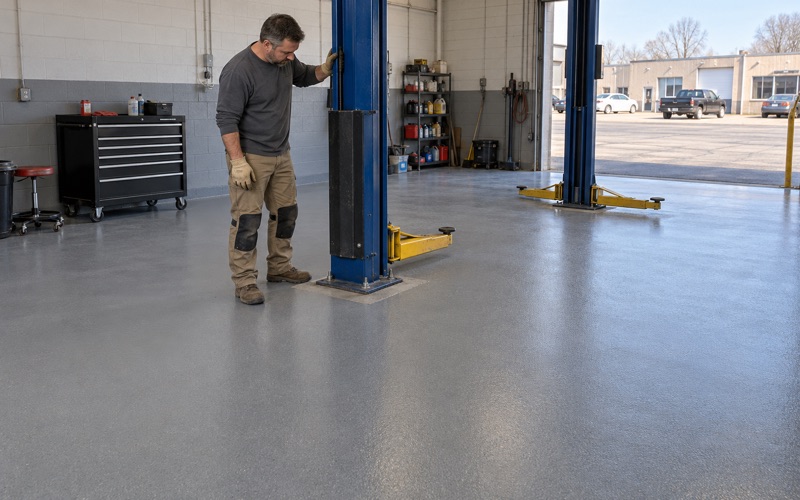
Janesville Epoxy Flooring has spent more than 20 years on epoxy flooring in Lake Mills and the rest of our territory, and the floors that ask the most of a coating here are the ones that stay wet all shift. A production floor that is hosed, scrubbed and splashed with cleaning chemicals every day is a different job from a garage, and we scope it that way from the first walk-through.
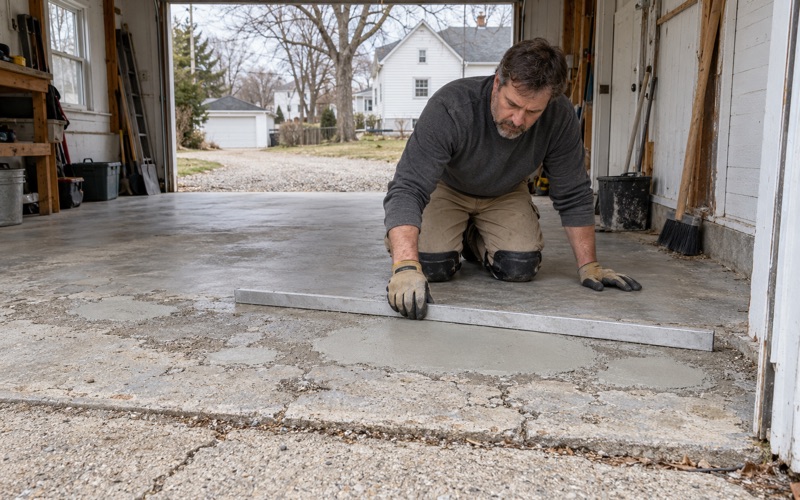
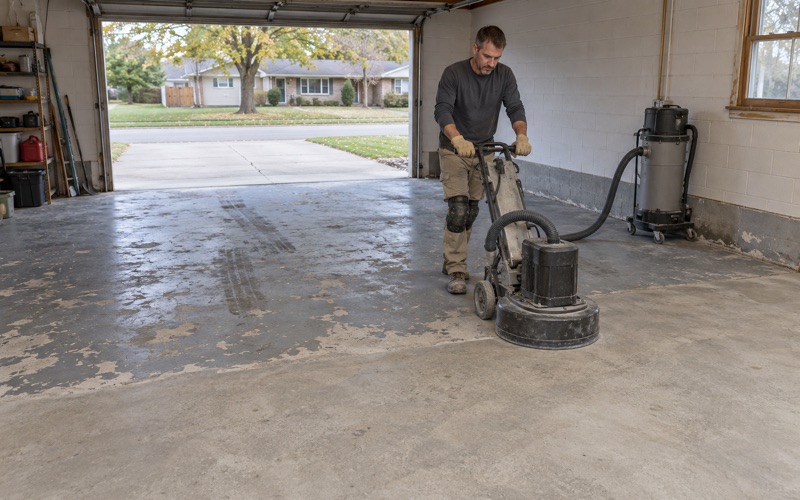
That starts with the slab itself. We open every floor with a diamond grinder or a shot blaster, never an acid etch, and we write a moisture test into the scope before anyone talks about color. If the cracks, joints or an old coating tell us the concrete needs repair or replacement first, we say so before a price is on the table.
The proposal you receive names the product, the system build and the finished thickness, so the floor that goes down can be checked against the one that was quoted. Warranty exclusions get read aloud before you sign, with moisture first on the list, and we schedule plant work around the hours your building has to keep running, nights and weekends included.
Breweries and a Distillery Shape the Work in Lake Mills
Tyranena Brewing on Owen Street
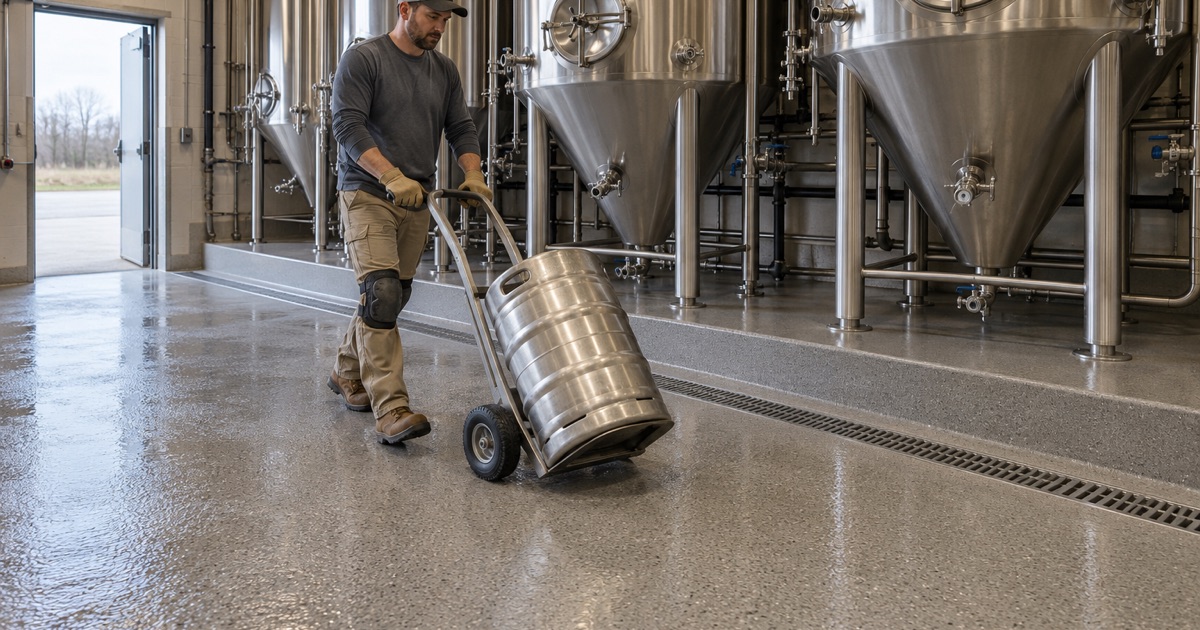
Lake Mills makes beer. Tyranena Brewing runs its production brewery and tasting room at 1025 Owen Street, inside the city limits, with a tasting room that seats 35 and free tours most Saturdays. Published accounts put the brewery’s capacity at about 45,000 barrels a year, which is a lot of tank cleaning, hose work and forklift traffic crossing one floor.
We have no relationship with Tyranena and have never worked there. We name it because it shows what a Lake Mills production floor is up against, and because any brewer reading this page will recognize the conditions. A floor at that scale is cleaned constantly, and every cleaning cycle ends up on the concrete sooner or later.
Another Brewery and a Distillery in the Industrial Park
The city’s own description of its industrial park lists a variety of manufacturers, including another brewery, a distillery, a chocolatier and a nationally known cheese packaging company. Those businesses are not named in that account, and we will not guess at them. What matters for flooring is that Lake Mills holds more than one beverage maker running a wet process.
A distillery floor sees grain, mash spills, hot water and its own cleaning routine, and a smaller brewery deals with the same chemistry as a large one in a tighter room. In both cases the coating is chosen for what lands on it during a working week, not for how it looks on opening day.
Looking for epoxy-flooring closer to Rockford? See Epoxy-Flooring Services in Rockford.
Caustic, Acid and Hot Water on a Brewhouse Floor
Cleaners From Both Ends of the pH Scale
A brewhouse floor gets hit from both directions. The Brewers Association’s 2019 safety presentation at the Craft Brewers Conference lists caustic and alkaline cleaners among brewery hazards, along with acid cleaning of fermenters and bright tanks, peracetic acid sanitizer and the forklifts that move kegs and pallets. Each of those drips, splashes and runs across the floor during a normal day.
The same presentation points brewers toward lower concentration peracetic acid and lower pH solid oxidizing cleaners in place of liquid caustic, and lists avoiding spills and keeping pathways clear as safe work practices. Those are good habits, but no brewery keeps every drop off the floor. A coating has to tolerate whatever the cleaning schedule actually puts down, along with hot rinse water on top of it.
Why Bare Concrete Loses to Brewery Cleaners
Plain concrete is porous. A brewery flooring trade piece puts it directly: concrete absorbs liquids, beer and caustic cleaning chemicals, and those chemicals can attack the cement matrix. Once the surface paste goes, the aggregate stands proud, the floor pits, and every pit holds standing liquid that is harder to clean and slicker to walk on.
That cycle feeds itself. A rough, pitted slab traps residue, which calls for more scrubbing and more chemical, which wears the concrete faster. A sealed, continuous surface breaks the cycle by keeping cleaners on top of the floor where a squeegee can move them, instead of letting them soak into the slab and keep working.
Selecting a System on Product Data
Chemical resistance varies from one product to the next, and we do not quote a resistance number we cannot source. For a brewhouse we compare manufacturer data against the cleaners and rinse temperatures you actually use, and we usually look at urethane cement or a 100% solids epoxy build rather than a thin garage coating. Your proposal names the product so you can read its data sheet yourself.
No single maker’s chart decides the job. We ask for your cleaning chemicals, how often each one hits the floor and how hot the wash-down runs, then match a system to that list. If the honest answer is that a section needs a heavier build than the rest, the proposal says so in writing.
Drainage, Texture and Dry Standing Places
What a Wet Process Means Under Federal Rules
Brewing is a wet process, and Wisconsin private employers fall under federal OSHA rather than a state plan. Under 29 CFR 1910.22, workroom floors must be kept clean and, to the extent feasible, dry. Where wet processes are used, drainage has to be maintained and dry standing places provided where that is feasible, and floors must be kept free of hazards such as leaks and spills.
That rule names no floor material, and no coating is OSHA approved or makes a floor compliant on its own. What a coating can do is support the work the rule describes. A smooth, continuous surface sheds water toward the drains instead of holding it in pits, and that makes keeping the floor clean and as dry as feasible a much easier daily routine.
Texture Built Into the Finish
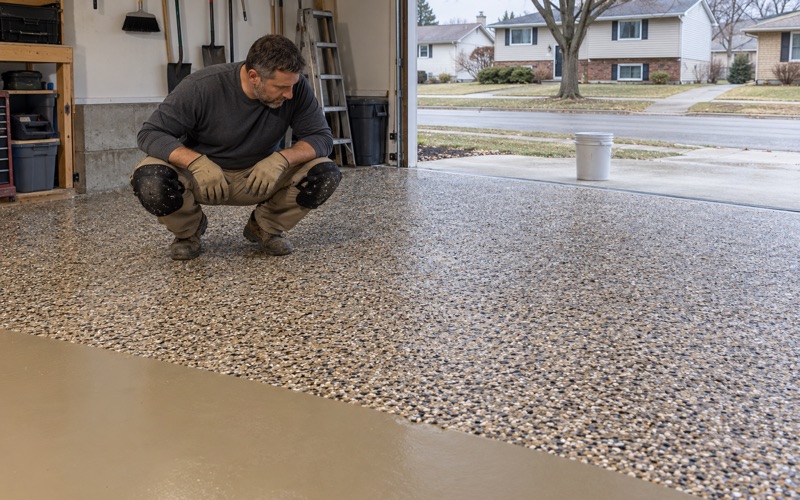
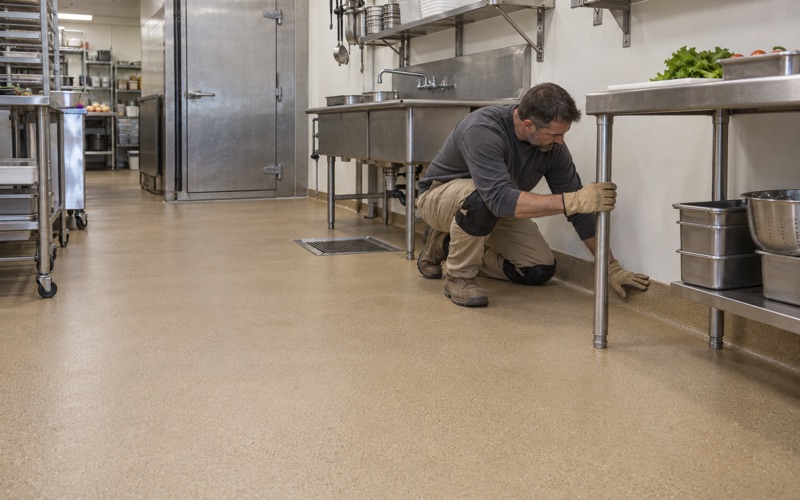
A wet floor needs traction, and the brewery trade guidance recommends slip-resistant surfaces. We build texture into the system itself, usually with a quartz aggregate broadcast locked under the topcoat, and we set the grit to the traffic. Walkways where staff stand to work may get a coarser profile, while areas that must squeegee clean get a finer one.
No floor is slip-proof, and we will not describe one that way. Texture is a balance between grip underfoot and how easily residue rinses away, so we show you sample boards and talk through where people stand, where carts roll and where water collects before we pick a profile for each zone of the room.
Joints, Forklifts and Your Production Schedule
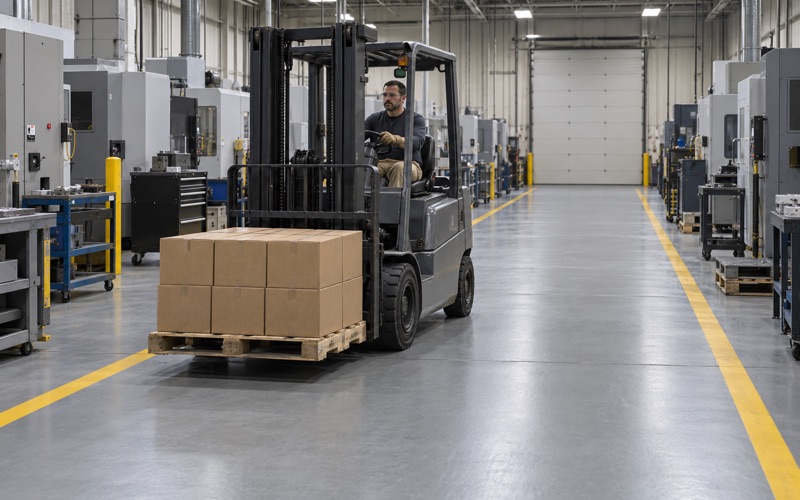
Electric forklifts and pallet jacks crossing a joint will chip an unprotected edge quickly. Before any coating goes over a plant or warehouse floor, we fill the joints with a semirigid filler so wheels roll across a supported edge. Moisture testing still comes first, because a wet production slab needs a moisture-mitigation primer or a system built for it.
A brewery cannot simply close for a week. We plan the grinding, coating and cure in sections around brew days and packaging runs, using overnight and weekend windows where they help. Curing is timed to slab temperature and dew point rather than the calendar, and grinding dust and slurry are collected on site instead of being washed down a drain.
Tasting Rooms, Homes and the Questions We Ask First
Taproom Floors and the County Food Program
A tasting room is a different space from the production floor behind it. Where a taproom serves food, it falls under the Jefferson County Environmental Public Health Consortium and the Wisconsin Food Code, which follows the amended 2013 FDA model. We ask the owner what the inspector has said about floor surfaces before we propose a finish for that room.
The production floor is the brewer’s own workplace safety question, while the public room answers to the county program. Keeping those separate in the scope helps us recommend a decorative but cleanable finish where customers sit and a heavier, textured system where the work happens, rather than forcing one floor across both rooms.
Garages and Basements in Lake Mills Homes
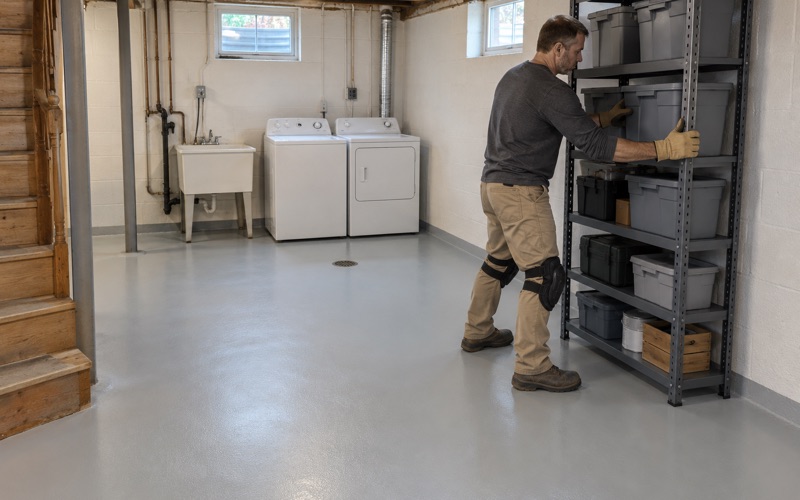
Residential work here starts with the housing itself. About a quarter of Lake Mills homes date from 1939 or earlier, and older slabs often carry patches, settling cracks and coatings layered over the decades. We read all of that before quoting and tell you plainly when a garage or basement floor needs repair first.
A garage floor gets a system built for the road salt and calcium chloride brine winter tires carry in, and Wisconsin does not require a vapor retarder under an unconditioned attached garage slab, so we test rather than assume a dry-looking floor is dry. Some homes near Rock Lake are seasonal, and we schedule those around when the owner can be there.
Permits, Contracts and Who to Call
Coating a floor and replacing a slab are different questions, so we ask the City of Lake Mills Department of Building Inspection whether a job needs a permit before it is scheduled. The city and the Town of Lake Mills are separate governments, and we confirm which one your address falls under before making that call.
Every Wisconsin home job gets a written contract before any deposit is taken, as the state’s home improvement rule requires. Wisconsin has no state license for floor coating, so we do not claim one. What we offer instead is a scope you can read, a named product and a moisture test on paper before the first pass of the grinder.
- 20+ Years in Concrete Coatings
- Moisture Testing in Every Scope
- Free Written Estimates