Janesville Epoxy Flooring brings more than 20 years of epoxy flooring work to Loves Park, and the floors we think hardest about here are the ones where a chip of coating counts as a defect. In an assembly bay, a flake of broken topcoat is not a cosmetic blemish. It is a loose object on a floor that somebody is paid to keep clear, and it was put there by the floor itself.
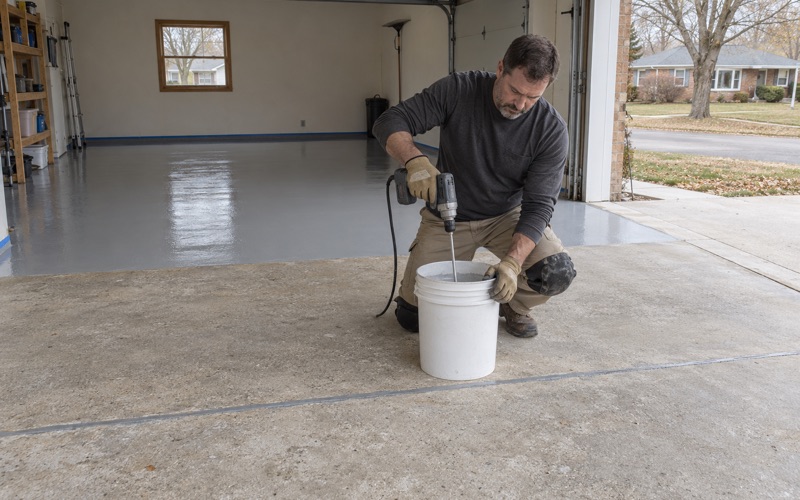
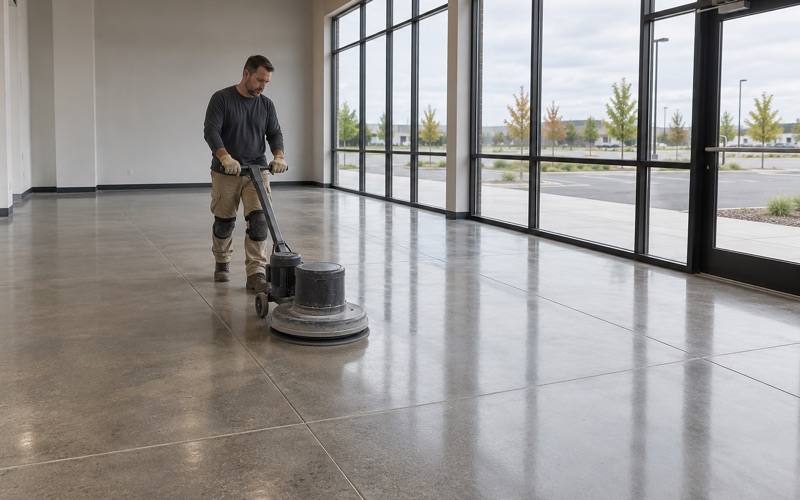
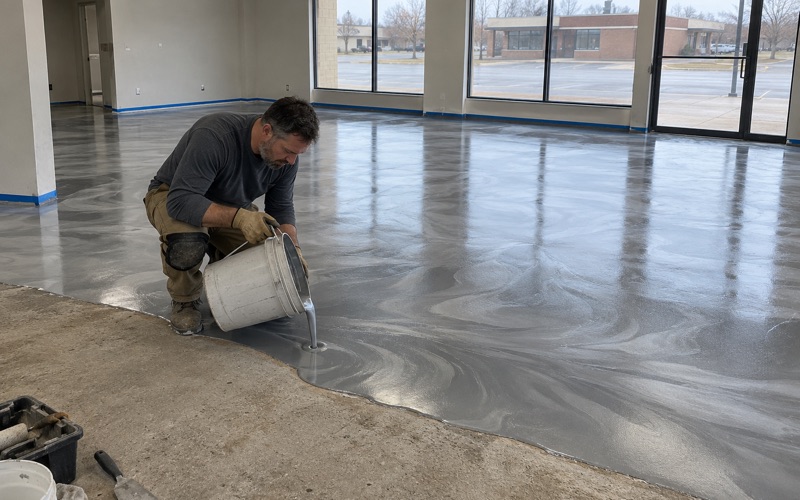
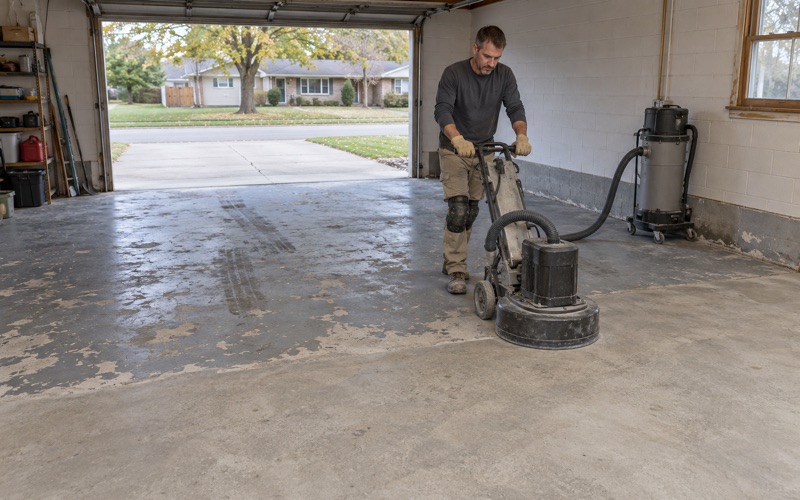
That is why our work starts below the coating. Every slab gets opened with a diamond grinder or a shot blaster, never acid, so the first coat bonds to sound concrete instead of a weak skin. Our written proposal names the product, the system build and the finished thickness, which lets a facilities manager check what was quoted against what actually went down on the floor.
Illinois rules shape the paperwork and the materials. Any Illinois job over $1,000 gets a written contract and the consumer rights pamphlet the state requires, and we apply coatings that meet the state’s VOC limits, which bind the applicator as well as the manufacturer. Production floors are scheduled around the hours a building has to keep running, including overnight and weekend windows.
Aircraft Fuel-System Plants and the Debris Problem
Woodward’s Loves Park campuses
Loves Park builds aircraft fuel-system parts. Woodward lists three Loves Park entries on its locations page: the Rock Cut plant at One Woodward Way, and both a plant and the Martin V. Glass Systems Test Facility at 5001 North Second Street. That North Second Street address sits inside city limits, in Rockford township in Winnebago County, rather than across the line in Rockford.
The Rock Cut campus dates to a 2012 announcement of roughly $200 million for a 300,000-square-foot production plant and office center on 60 acres, with more than 660 jobs planned over five years. Job postings describe operations technicians there handling production, assembly and test of fuel-system components. We have no relationship with Woodward or any plant; we describe the setting because it defines what local manufacturing floors are asked to do.
What a foreign object debris program watches for
Aerospace shops run foreign object debris prevention, usually shortened to FOD, and the floor is part of it. Secondary sources say aerospace FOD programs cite AS9100D clauses 8.1 and 8.5.1, and that SAE AS9146 is the dedicated FOD program standard. We have not read either text, and neither one names floor coatings, so we never tell a plant a standard calls for epoxy.
What we have read is one prime contractor’s published procedure, from Lockheed Martin UK, which is that company’s own document and not Woodward’s. Its daily housekeeping list includes cleaning all floors, decks, stands, tooling fixtures and jigs. It defines a FOD walk as an organized search of an area for foreign objects, and it prefers vacuuming over compressed air for picking debris up.
Why the floor becomes part of the search
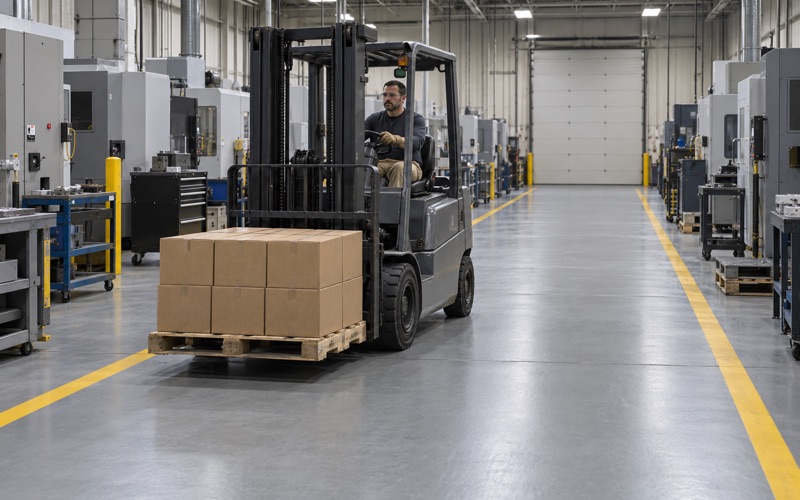
Our inference as floor contractors is simple. In a FOD-controlled assembly or test area, the floor must not shed anything. A coating that chips, flakes or peels at the edges under carts and dropped tools produces exactly the fragments a FOD walk is looking for, and it keeps producing them shift after shift until the floor is redone.
Whether and when any controlled area can be worked on is the plant’s own quality-system decision, never ours. Our part is to show up with a scope that answers the floor questions plainly: how the edges will hold, how the surface handles impact, how zones get marked, and how easily the finished surface vacuums and sweeps clean between walks.
Looking for epoxy-flooring closer to Elkhorn? See Epoxy-Flooring Services in Elkhorn.
A Coating That Will Not Chip Under Carts and Dropped Tools
Edges and joints break first
Most coating failures in a busy plant start at an edge. A sawcut control joint coated straight over leaves a thin bridge of resin that cart wheels and forklift tires snap off within weeks. Those broken bits are small, sharp and easy to miss, which is the worst combination on a floor where loose material matters.
We fill plant, shop and warehouse joints with a semirigid joint filler before any coating goes over them, so wheels roll across a supported surface instead of a brittle lip. At doorways, trench drains and the perimeter, we grind a keyed termination so the system ends in a groove rather than tapering to a feather edge that lifts.
Building for impact
A dropped wrench or fixture plate tests the system build more than the topcoat. A thin roll-on coat over bare concrete has little to absorb a hit, while a thicker 100% solids epoxy body coat gives a dropped tool something to dent before anything cracks. Where impact and heat are both heavy, urethane cement is often the tougher base for the job.
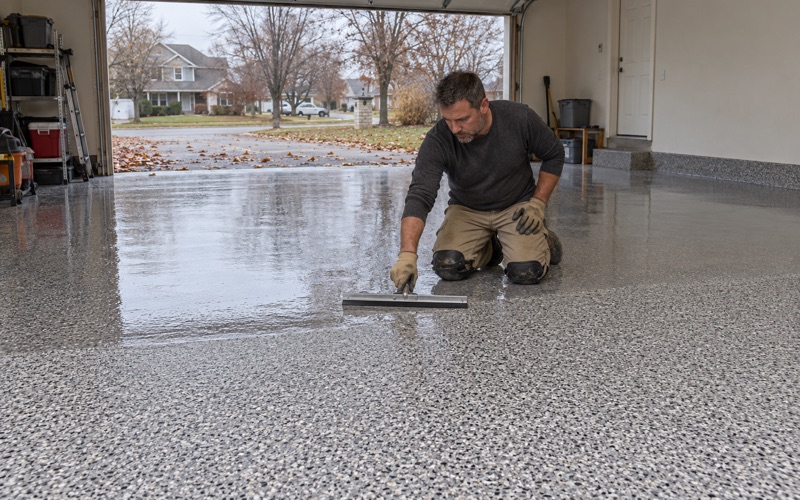
A quartz aggregate broadcast locked into the body coat adds hardness through the film, and a polyaspartic or polyurea topcoat adds abrasion resistance on top. We spell out that build, layer by layer, with a finished thickness in the proposal, because a promise of a heavy-duty floor means nothing unless it can be measured after the work is done.
Bond starts with the profile and the moisture test
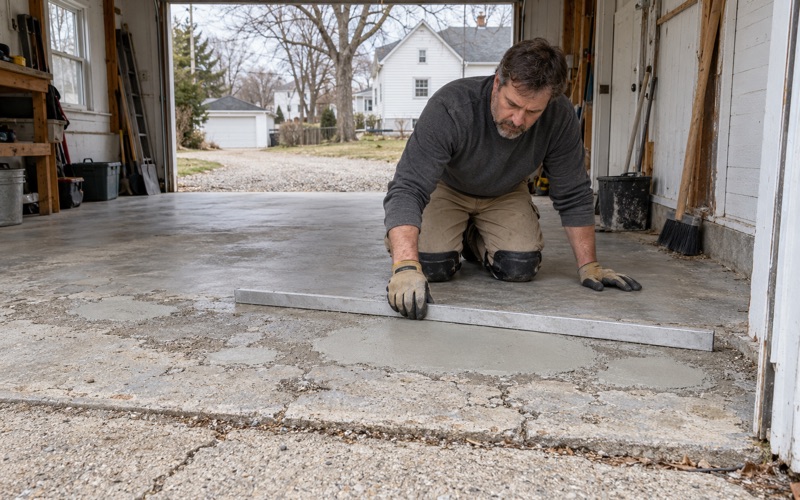
Chips also come from coatings that never truly bonded. Diamond grinding or shot blasting opens the slab to a measured ICRI CSP surface profile, which gives the primer real texture to grab. We read the cracks, joints and any old coating first, and we say plainly when a slab needs repair or replacement before it can be coated.
Moisture testing is a line item in our scope, not a sales add-on after a floor blisters. ASTM F2170 in-situ relative humidity probes or ASTM F1869 calcium chloride testing tell us what the slab is releasing. When readings run high, a moisture-mitigation primer goes down first, and warranty exclusions are read out before the job is sold, with moisture named first.
Marking FOD Zones and Walkways in Color
Color built into the floor
The Lockheed Martin procedure marks FOD areas with signage in specific colors, high-visibility colored tape and high-visibility floor decals. Tape works, but on a working floor its corners lift, its adhesive collects grit, and a torn strip becomes one more loose item underfoot. Many plants retape the same boundary several times a year.
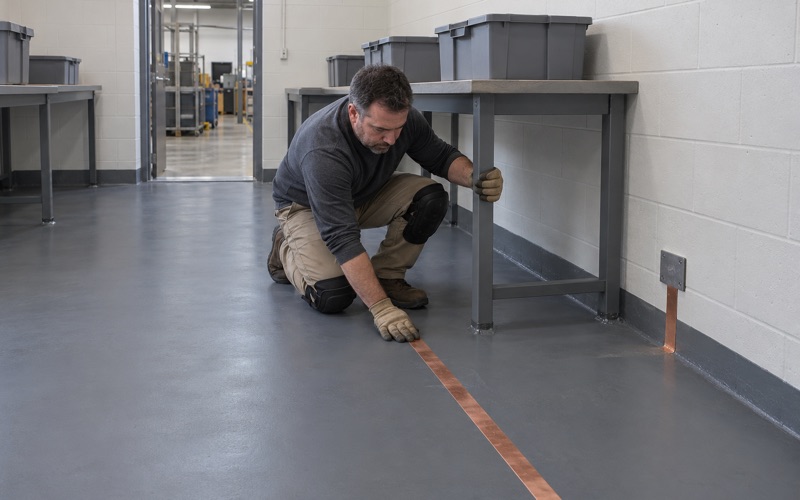
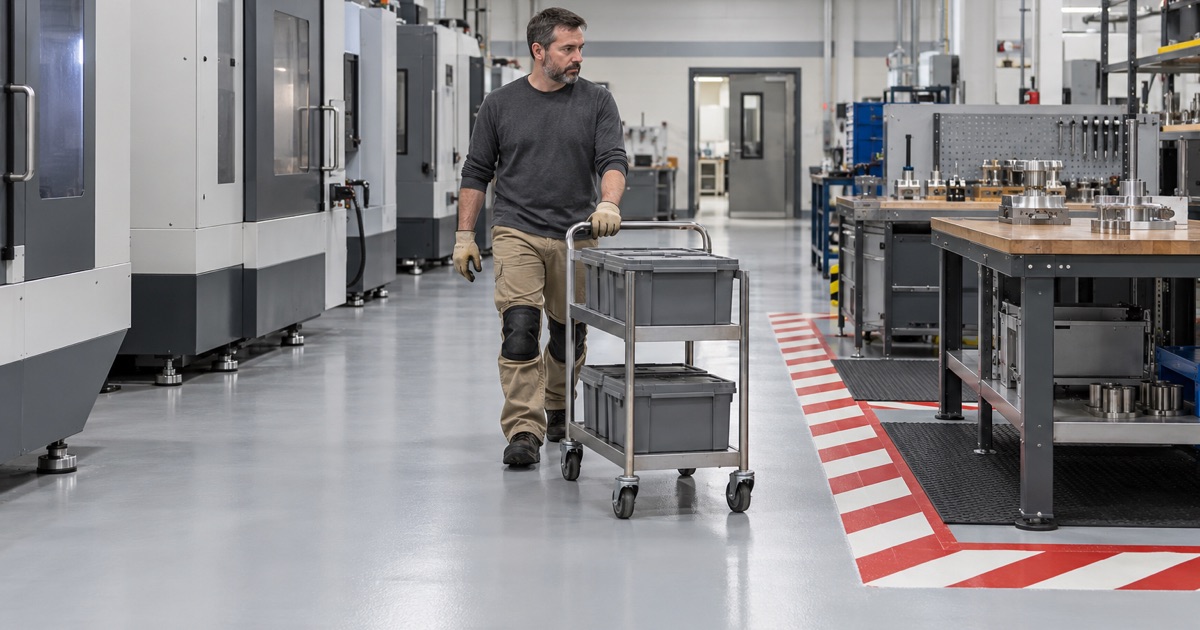
Color laid into the coating system avoids that cycle. We can pour a FOD zone, an aisle or a staging box in a contrasting pigmented epoxy and seal it under the same clear topcoat as the field color, so the line wears with the floor instead of peeling off it. Decals and signs still have a place at entrances, where they carry text a painted band cannot.
Laying out the zones
The plant decides where controlled areas begin and end, and we work from its drawing. Before coating, we snap the boundaries on the prepared slab and walk them with the facilities team, because moving a line after the topcoat has cured means grinding it out and starting that section over.
Widths, colors and corner details are agreed in writing. A walkway band, a tool-staging box and a controlled-area border each get a named color so the layout reads the same way on the second shift as it did on the day it was approved. That record also makes a later repair match the original layout rather than a guess.
Keeping marked lines intact
Marked lines take more traffic than the field around them, since carts turn at boundaries and people pause on them. A pigmented band sealed under a polyaspartic topcoat resists scuffing better than paint or tape sitting on the surface, and when it does wear, it wears as a dull spot rather than flaking into fragments.
We plan recoat intervals for those bands at the outset. A light abrasion and fresh topcoat over a worn walkway is a short job that fits a weekend shutdown, which is far easier on a production schedule than chasing peeled tape or patching a line that broke loose at the edges.
A Surface That Vacuums Clean Every Shift
Texture is a tradeoff
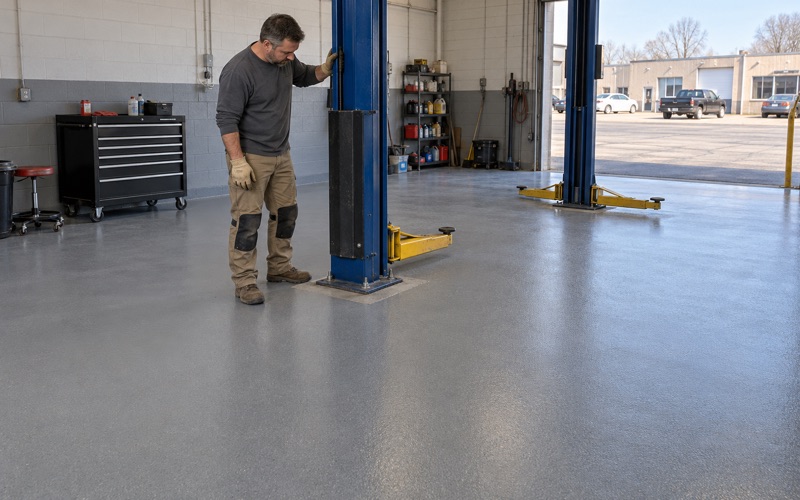
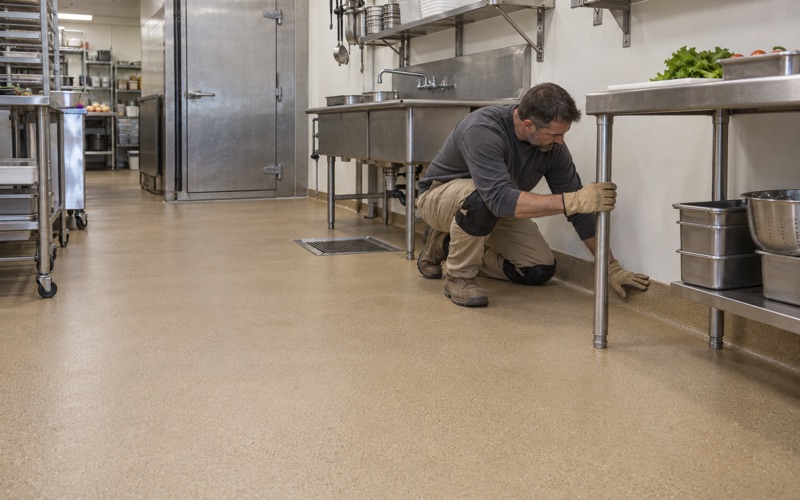
If vacuuming is the preferred way to retrieve debris, the finish has to let a vacuum work. A heavy vinyl flake broadcast or coarse grit traps small screws, wire clippings and shavings in its valleys, where a FOD walk misses them and a vacuum skims past. A smooth, tight finish gives debris nowhere to hide.
Smooth still has to be safe underfoot, so we balance the two. A fine aggregate in the final coat gives enough grip for wet spots near wash areas without creating pockets that hold debris. Where a plant wants both, we keep the textured finish to the zones that need traction and leave the assembly floor smooth.
Curing and scheduling around production
Curing is scheduled against slab temperature and the dew point spread at the slab surface, not against the calendar. A topcoat laid over a slab near its dew point can blush or cure soft, and a soft surface scuffs into dust. We check the readings before each coat and hold the work when the numbers say wait.
For a running plant, that usually means phasing the floor in sections over nights and weekends while production continues elsewhere in the building. Grinding dust and slurry are collected on site and never washed toward a street drain. We ask the City of Loves Park Building Department whether a job needs a permit before scheduling, since replacing a slab and coating one are different questions.
Garages and shops at home
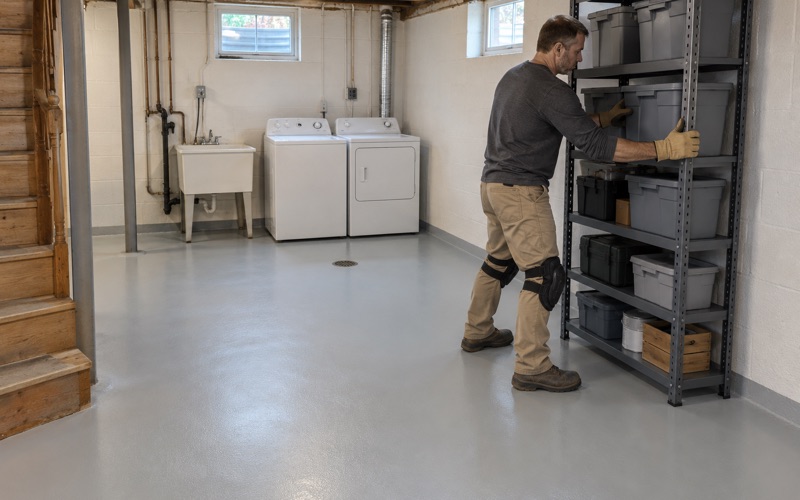
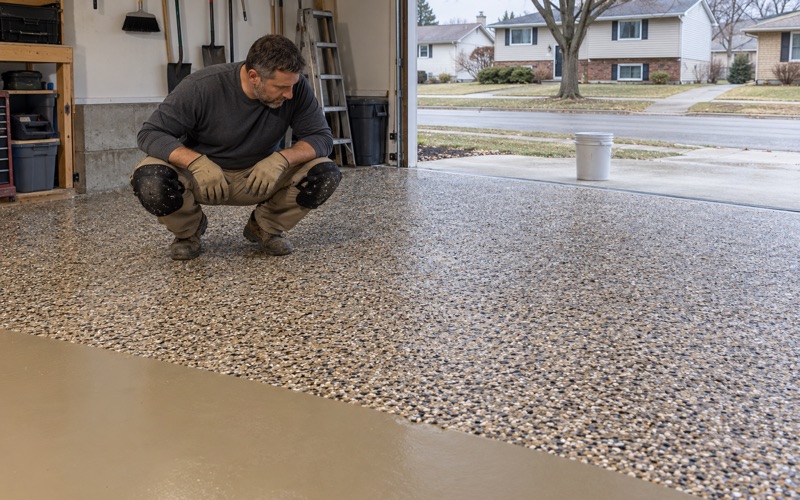
The same smooth, chip-resistant thinking carries into Loves Park garages and home shops. Most of the city’s housing was built from 1980 on, with a peak in the 2000s, so plenty of garage slabs are old enough to carry oil stains, salt scaling and earlier coatings that have started to lift.
We grind those slabs open, moisture test them like any plant floor, and build for the road salt and calcium chloride brine a northern Illinois winter tracks in on the tires. A polyaspartic topcoat resists hot tire pickup, and the finished floor sweeps clean, which is the same goal as on the production floor, only measured in a homeowner’s Saturday afternoon.
- 20+ Years in Concrete Coatings
- Moisture Testing in Every Scope
- Free Written Estimates