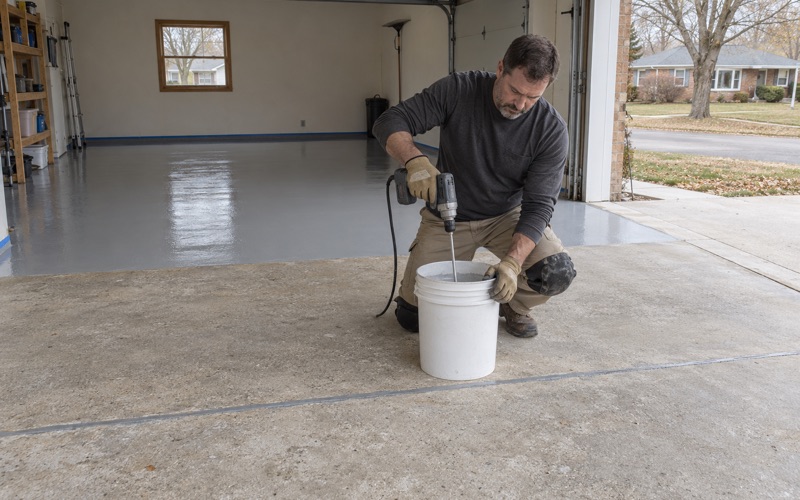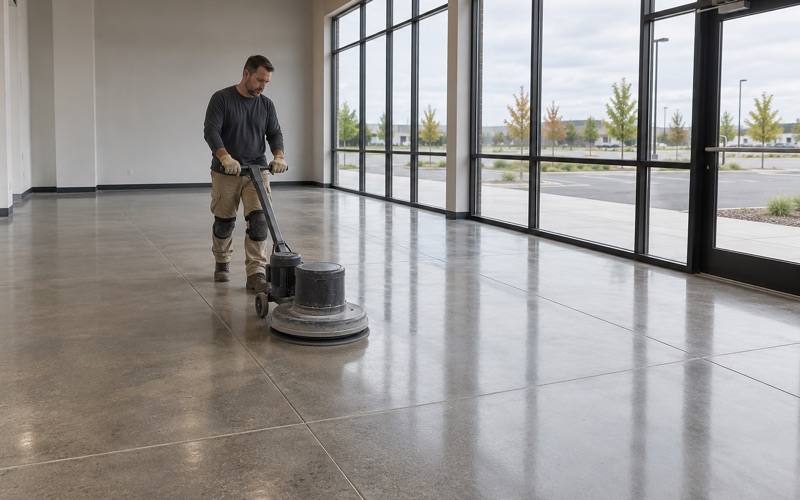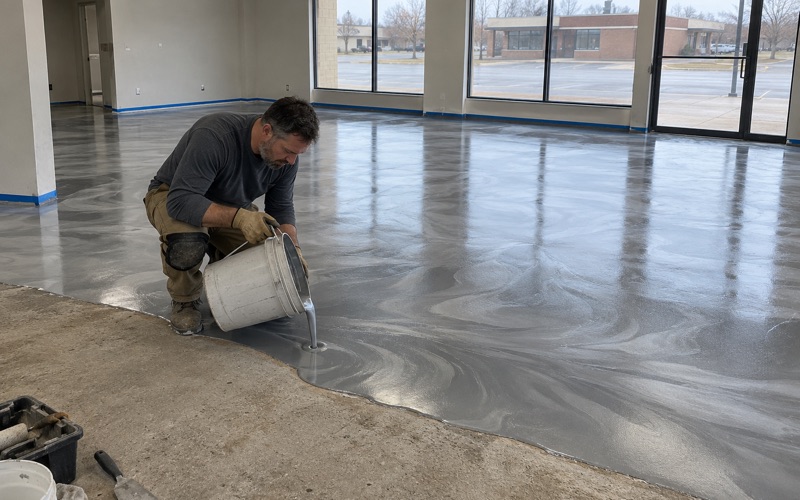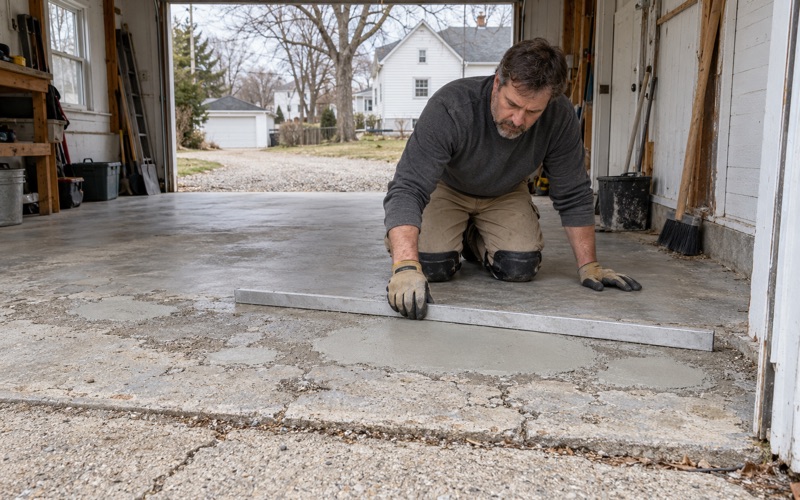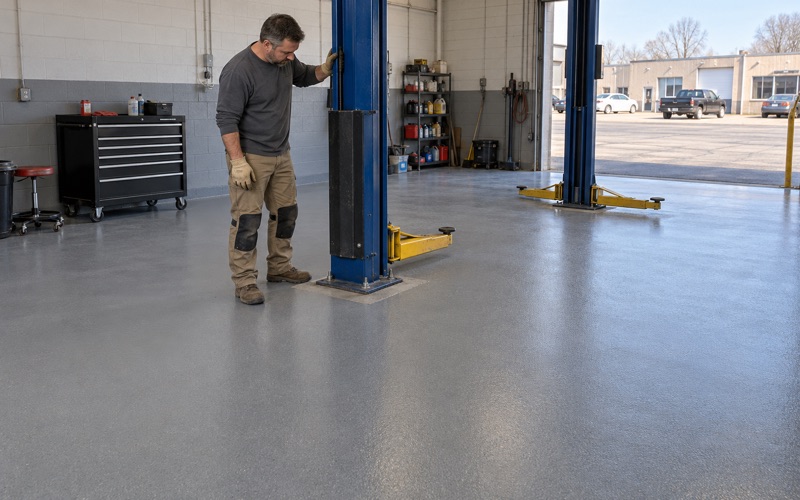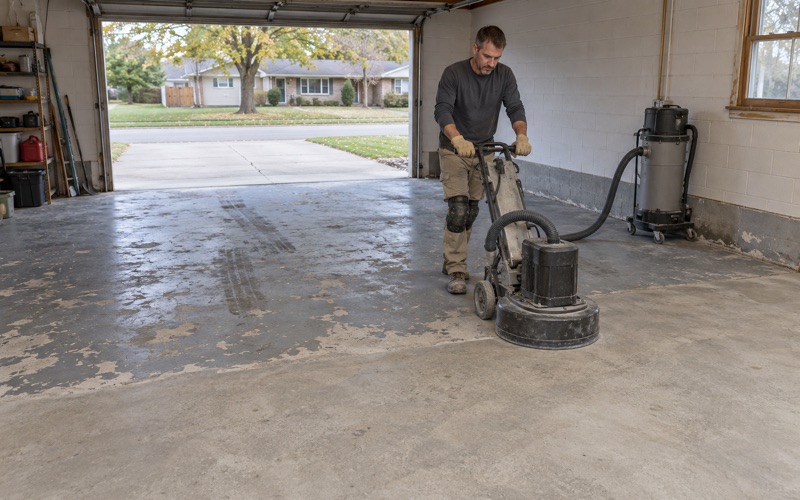
Janesville Epoxy Flooring has spent more than 20 years putting down epoxy flooring in Milton and across Rock County, on plant floors, shop bays and the garage slabs under family cars. Every job starts the same way: we open the concrete with a diamond grinder or shot blaster, never acid, so the coating has a real profile to bite into. What goes on top of that profile is where Milton work gets interesting.
In a building that handles plastic resin, the finish has to do two jobs that pull against each other. It has to be smooth enough that a broom or shop vacuum clears spilled pellets in one pass, and rough enough that a worker who steps on the ones nobody has swept yet still has some grip. We plan that balance area by area rather than coating a whole floor one way.
The proposal you get from us names the product, the system build and the finished thickness for each zone, so you can check the floor against the quote after we leave. Moisture testing sits on that proposal as its own line, whether the slab is under an extruder or under a minivan, and warranty exclusions are read to you before anything is signed, with moisture named first.
Film Extrusion in Milton and Why Pellets Make a Floor Slick
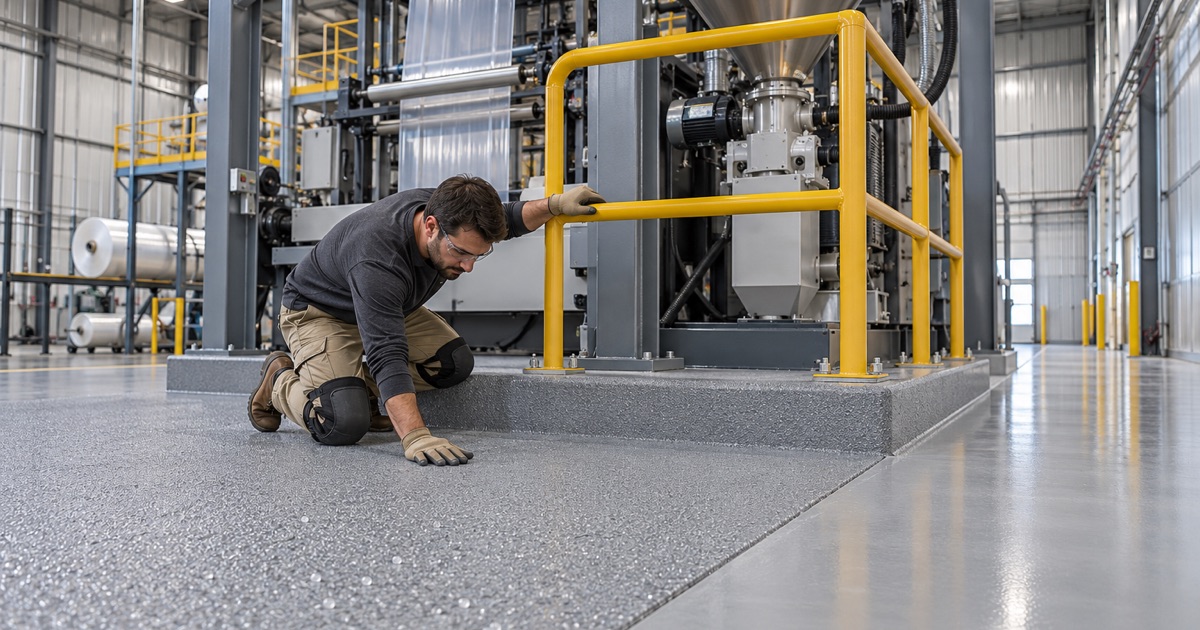
The Crossroads Business Park Plants
Milton’s largest manufacturer is Charter Next Generation, which turns resin into specialty films for flexible packaging. Its corporate office is in Milton, and the Rock County Alliance reported in April 2023 that the company would expand its footprint in the Crossroads Business Park, starting with roughly 200,000 square feet. The state announced the same project that May as a $270 million investment with 340 jobs over eight years.
We have no relationship with that company and have not seen any of its floor specifications. We mention it because a plant that size shapes the work around it. Blown-film lines run on resin pellets, and a building that receives, stores or processes that material tends to inherit the same housekeeping problem on its floor, whether it is a large plant or a small shop.
What a Loose Pellet Does Underfoot
OSHA’s plastics industry guidance is blunt about the hazard. It calls slips and falls one of the major causes of plastics industry accidents, and it says walking surfaces with spilled resin pellets or beads provide minimal traction. A pellet is a small, hard bead, and on a hard floor it behaves a lot like a ball bearing under a boot heel.
That is why the gloss level of a coating matters more in a film plant than almost anywhere else. A slick high-build epoxy looks clean and sweeps beautifully, yet it gives a rolling bead nothing to catch on, so the bead and the sole slide together. Slip resistance on these floors comes from the surface texture we build into the system, not from the resin alone.
Housekeeping Comes First
OSHA’s same page says the pellet hazard can be minimized through proper safety and good housekeeping practices, and it points to Operation Clean Sweep. That is the industry’s voluntary pellet-loss program, built around containment, routine inspection of production areas, and keeping brooms, dustpans, shop vacuums and catch trays close at hand. It does not prescribe a floor coating, and we never tell a plant otherwise.
What a coating can do is make that housekeeping easier or harder. A floor that a broom clears fast tends to get swept more often. A floor whose texture traps pellets and dust gets swept less well, and the hazard builds back up between shifts. The finish should serve the cleaning routine the plant already runs, not fight it.
Looking for epoxy-flooring closer to Edgerton? See Epoxy-Flooring Services in Edgerton.
What OSHA’s Walking-Surface Rule Asks of a Floor
The Text of 29 CFR 1910.22
The federal rule for walking-working surfaces is 29 CFR 1910.22. It says the floor of each workroom must be maintained in a clean and, to the extent feasible, dry condition, and that surfaces must be kept free of hazards such as leaks, spills, corrosion, snow and ice. It also requires surfaces to be inspected regularly and maintained in a safe condition.
Read closely, the rule is about condition and upkeep. It does not require epoxy or any other coating, and it sets no slip-resistance number a floor has to reach. Anyone who sells a plant manager a coating as the way to satisfy OSHA is selling something the regulation does not say.
Repair Before Reuse
One clause matters more to us than the rest. Under 1910.22(d)(2), a hazardous condition on a walking surface has to be corrected or repaired before employees use it again, or guarded until it is. A coating that has worn smooth in a traffic lane, or peeled into lips at a doorway, is exactly the kind of condition that clause describes.
That is why we read the cracks, worn lanes and old coating before we quote, and say plainly when a slab needs repair or replacement first. Coating over a broken floor hides the problem for a season and then puts it back under the people walking on it. Plant work is booked into overnight and weekend windows when the lines can spare the floor space.
Where a Coating Fits the Rule
A well-chosen floor helps a plant keep up with the clean and dry language more easily. A sealed surface does not soak up hydraulic oil or wash water, and a broadcast texture gives traction where pellets are likely to land. Those are practical benefits, but they support the plant’s own inspection and cleanup program rather than replace it.
No coating eliminates slips, and we will not print a rating we cannot source. What we can do is explain the trade-off in each area, show sample boards at different texture levels, and let the people who sweep the floor every day weigh in before a system is chosen.
Texture by Zone: Aisles, Extruders and Resin Unloading
Main Aisles and Cart Lanes
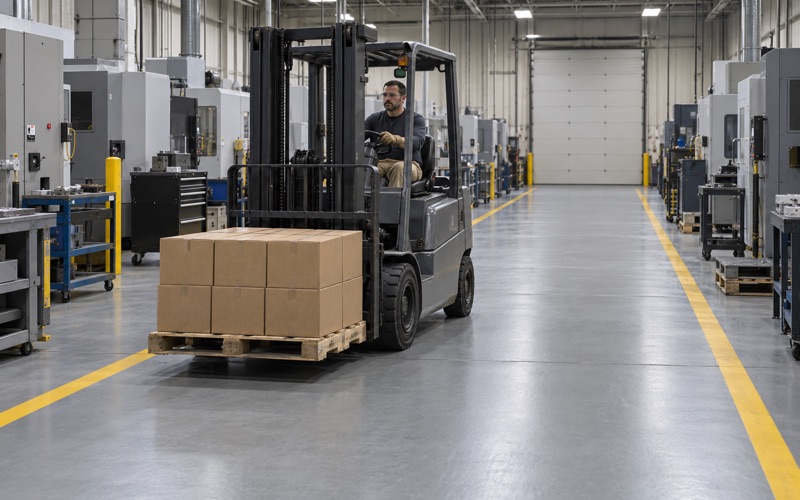
Traffic aisles carry carts, forklifts and most of the foot traffic, and pellets that escape a bag or gaylord tend to get kicked and rolled into them. Here we usually build a 100% solids epoxy base with a fine quartz aggregate broadcast, then a polyaspartic or urethane topcoat rolled on to cap the sharpest peaks. The result has bite underfoot but still lets a wide push broom carry pellets along.
Before anything goes on, the slab is ground to a measured ICRI surface profile so the base coat locks into the concrete instead of resting on top of it. A coarser profile goes under a heavier broadcast build, which is one reason our proposal lists the system zone by zone rather than as one price per square foot.
Around the Extruders
The floor near the extrusion lines sees heat, oil drips and steady foot traffic from operators working the same few square feet all shift. Pellets can fall here during changeovers and hopper loading. We generally go one step coarser on the broadcast around these platforms, because this is where someone is most likely to step on a bead they did not see.
Coarser texture holds more debris, so we keep that zone tight. Its edges follow where operators actually stand and walk, and the smoother aisle finish starts where they stop. Drawing those lines is a walk-through job done with the shift supervisor, not something read off a floor plan in an office.
Resin Unloading and Storage
The area where bulk resin arrives by truck or in gaylords is where the largest spills happen and where a shop vacuum gets its heaviest use. A heavily textured floor in this zone can hold pellets in its valleys and fight the vacuum. We lean toward a finer, more sweepable surface here and rely on the plant’s containment trays and cleanup gear to catch what spills.
That choice runs opposite to the extruder zone, which is the point. One finish across an entire plant gets either the aisles or the unloading area wrong. The zone plan is our recommendation, drawn from OSHA’s text and from how pellets behave on a floor, and the plant’s own safety team has the final say before we grind.
Milton Homes and Garages
A Town of Owner-Occupied Houses
Away from the business park, Milton is a Rock County city of 5,716 people at the 2020 census, and most of its housing is detached single-family homes. Census estimates count 1,698 owner-occupied detached houses, and about 74 percent of households own their home. About 24 percent of the housing stock dates from 1939 or earlier, and another 465 units went up in the 2000s.
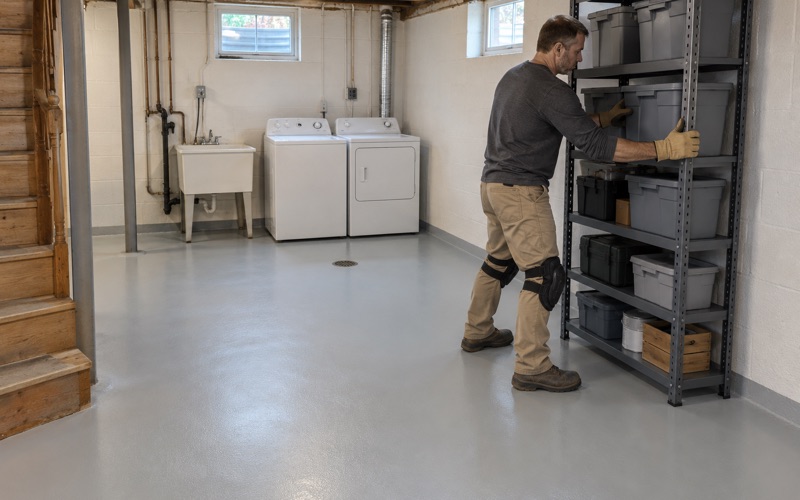
Those two eras bring different slabs. An older garage or basement floor may be thin, patched and stained with decades of oil, while a 2000s slab is usually sounder but can still carry moisture nobody has checked. We test both before quoting, using an ASTM D4263 plastic sheet test as a first read and calcium chloride tests or in-situ relative humidity probes when the numbers matter.
Built for Road Salt and Brine
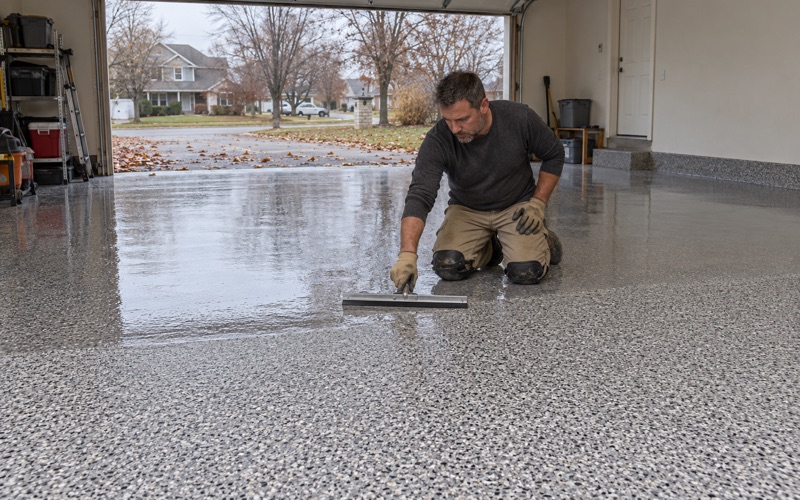
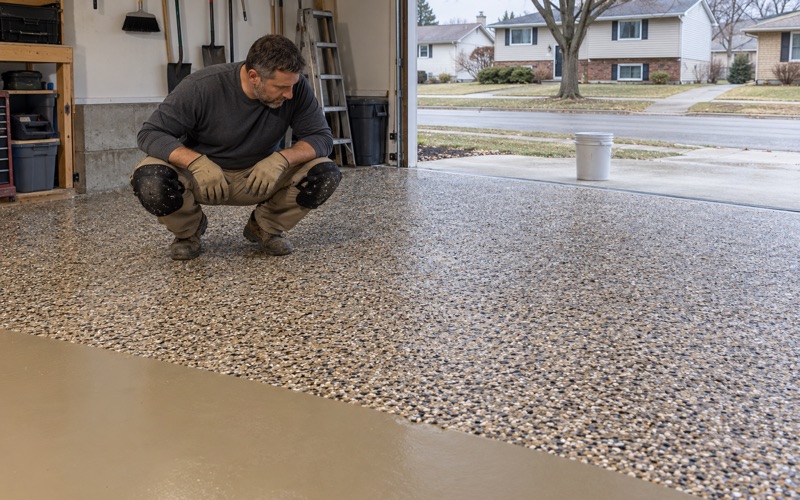
A Milton garage floor spends the winter under tires dripping rock salt and calcium chloride brine. That chemistry eats at bare concrete and at cheap one-part coatings, so our garage systems start with a ground slab, then a 100% solids epoxy or polyurea base, a vinyl flake broadcast and a polyaspartic topcoat that resists hot tire pickup. The flake also adds texture where wet boots step out of the car.
Curing is scheduled against slab temperature and the dew point at the surface rather than the calendar. An unheated garage in January is often too cold to cure a coating properly, and when it is, we say so and book the job for spring instead of gambling with your floor.
Contracts, Permits and the City Inspector
Every Wisconsin home job gets a written contract before we take a deposit, as the state’s ATCP 110 home improvement rule requires. Wisconsin’s dwelling code does not require a vapor retarder under an unconditioned attached garage slab, which is one more reason we test rather than assume a dry-looking floor is a dry one.
Coating a slab and replacing one are different questions. Before a slab replacement is scheduled, we ask the City of Milton building inspections office whether it needs a permit, keeping in mind that the city is separate from the surrounding Town of Milton. Grinding dust and slurry are collected on site and never washed toward a street drain.
- 20+ Years in Concrete Coatings
- Moisture Testing in Every Scope
- Free Written Estimates