Janesville Epoxy Flooring has spent more than 20 years on epoxy flooring in Stoughton and across our Wisconsin service area, and the part of a job we plan hardest is the moment a quote meets the real slab. On an older floor, that moment comes after the old surface is ground open, not at the kitchen table where the price was first written down.
That is why our Stoughton proposals are built the way Wisconsin’s home-improvement rule expects. The contract is in writing and signed before a deposit is taken, it names the product, the system build and the finished thickness, and any change to that scope is written down too. Nothing about the floor gets decided by a quick phone call halfway through the job.
This page walks through how that works on a Stoughton garage or basement: what an old slab can hide, what the written contract has to say, how a change or a product swap is handled, and why an honest quote talks about upkeep and warranty exclusions before anyone signs. None of it is legal advice; it is how we run our own jobs.
Old Stoughton Slabs and What Surface Prep Uncovers
A Housing Core That Predates 1940
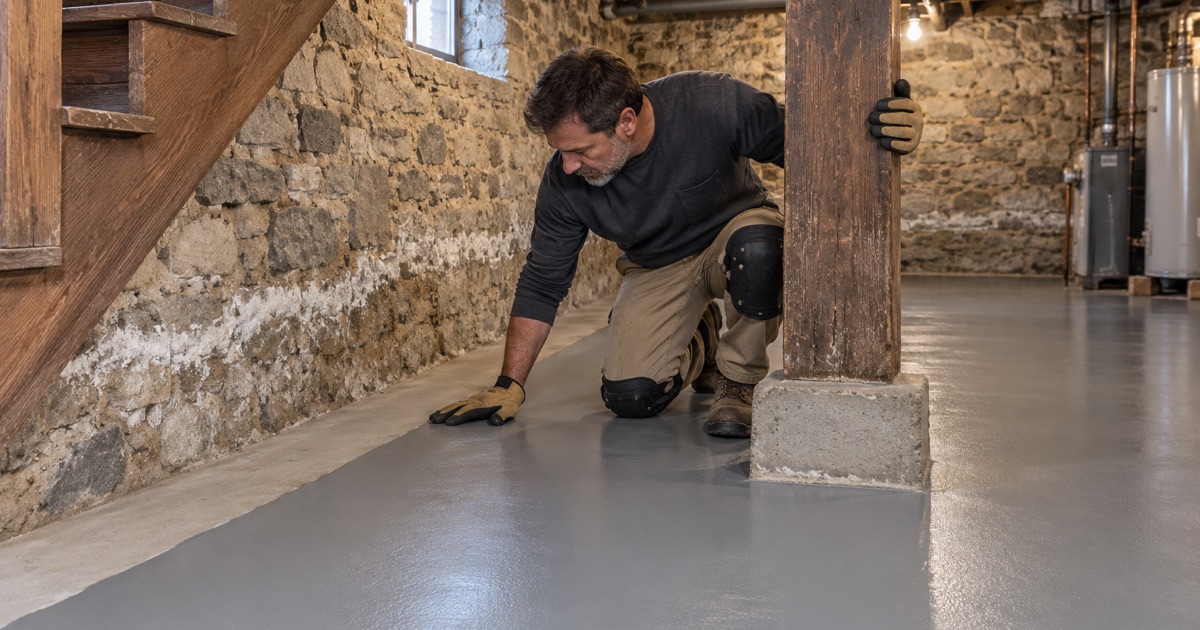
Stoughton straddles the Yahara River about 20 miles southeast of Madison, and much of its older housing grew around the Norwegian immigrant settlement of the late 1800s and early 1900s. Census estimates count 1,094 of the city’s 5,796 housing units as built in 1939 or earlier, the largest single age bracket in the city, and about two households in three own their home.
Those numbers matter to a coating job only because of what they set up. An owner-occupied older house is the kind of property where a garage or basement floor has seen decades of earlier owners, earlier fixes and earlier finishes. We do not assume any given house has a problem slab, but we price a pre-1940 floor knowing the surface may not tell the whole story.
What Grinding Can Reveal
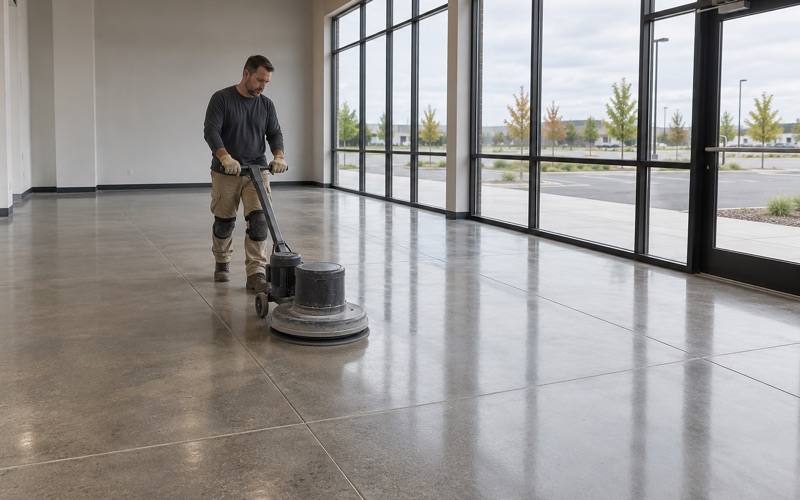
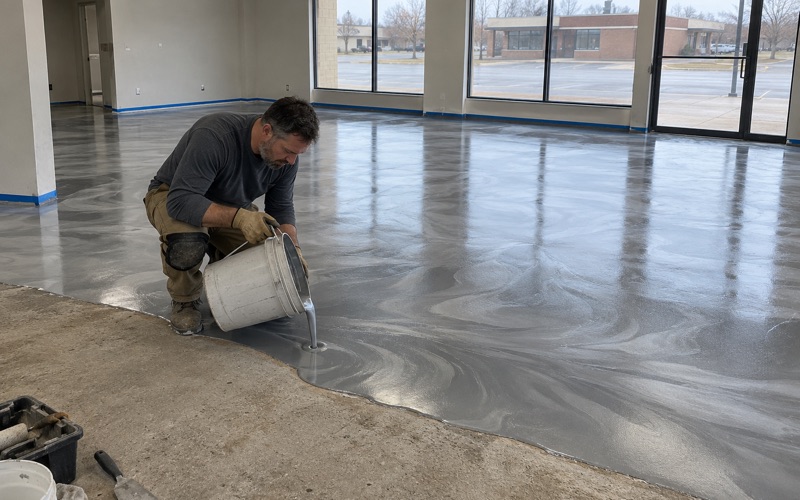
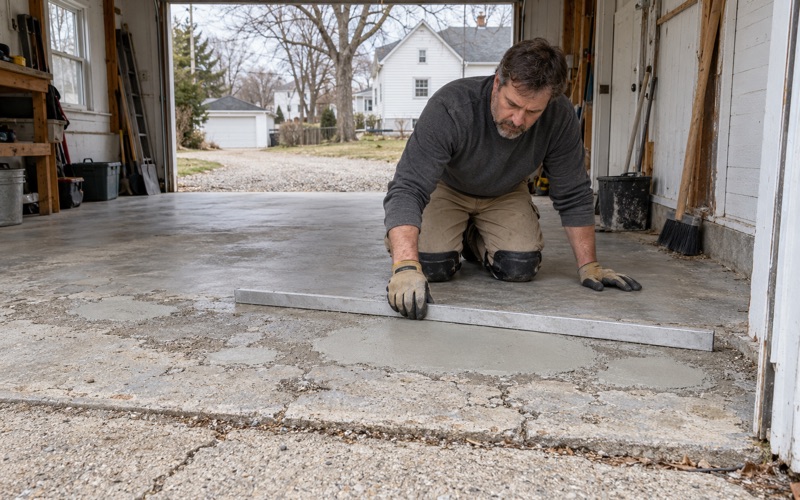
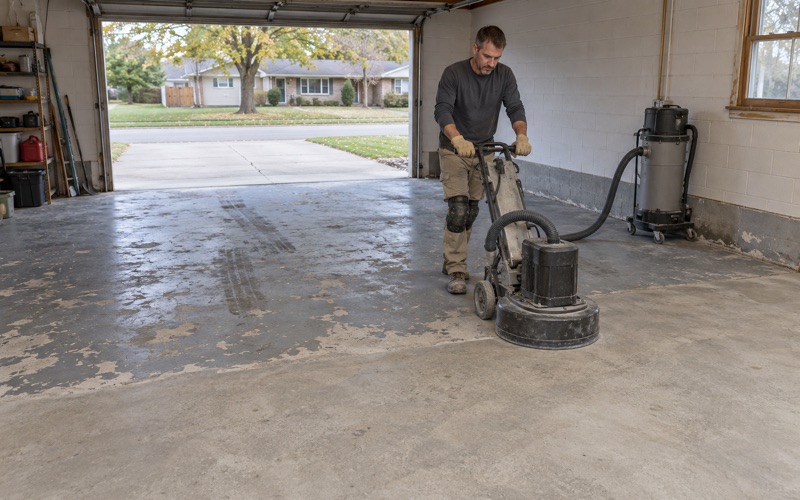
Every slab we coat is opened mechanically, with a diamond grinder or a shot blaster, to an ICRI surface profile the primer can grip; we do not acid etch. On an older floor, that first pass is where hidden conditions show up: an earlier paint or sealer nobody mentioned, a patch poured thinner than the rest, or a section of concrete that crumbles instead of profiling cleanly.
Before we quote, we read the visible cracks, joints and any old coating, and we tell an owner plainly when a slab looks like it needs repair or replacement first. Some conditions only show once the surface is opened, though. That is the honest reason a quote on an old Stoughton floor carries a written plan for what happens if the grinder finds something the walkthrough could not.
Moisture Is Tested, Not Guessed
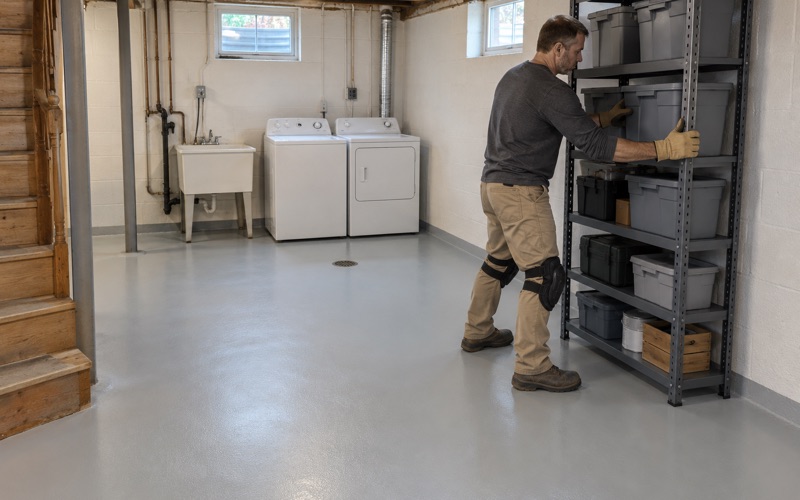
Moisture testing is its own line in our scope on every basement and garage slab. Depending on the floor, that can mean an ASTM D4263 plastic sheet test, ASTM F1869 calcium chloride vapor emission testing, or ASTM F2170 in-situ relative humidity probes. A slab that looks dry can still push enough vapor to lift a coating, and outgassing through old concrete shows up later as pinholes.
A coating is a finish on concrete. It does not hold back water, it is not a fix for water coming up through a slab, and we never sell it as a radon remedy. If testing reads high, the plan shifts to a moisture-mitigation primer or a different system, and under Wisconsin’s rule that shift goes on paper before the work continues.
Looking for epoxy-flooring closer to Delavan? See Epoxy-Flooring Services in Delavan.
What ATCP 110 Puts in a Written Stoughton Contract
When the Contract Has to Be Written
Wisconsin’s home-improvement rule, Wisconsin Administrative Code chapter ATCP 110, covers the remodeling, altering, repairing, painting or modernizing of residential property, which is where a garage or basement floor coating falls. The state’s consumer protection agency, DATCP, enforces it. The rule governs how a seller does business; it does not vouch for any coating, product or contractor.
Under 110.05, a home-improvement contract must be in writing when it asks for any payment before the seller finishes the work, and also when it was solicited away from the seller’s place of business. We take a written, signed contract on every Wisconsin home job before a deposit changes hands, so whether a particular job crosses that line never becomes a question.
What the Paper Has to Say
The rule lists what that written contract contains: the seller’s name and address, a description of the work, the principal products and materials with their brands, the total price, the start and completion dates, and any warranty terms. Our proposal goes further on the floor itself, naming the system build and the finished thickness so the result can be checked against what was promised.
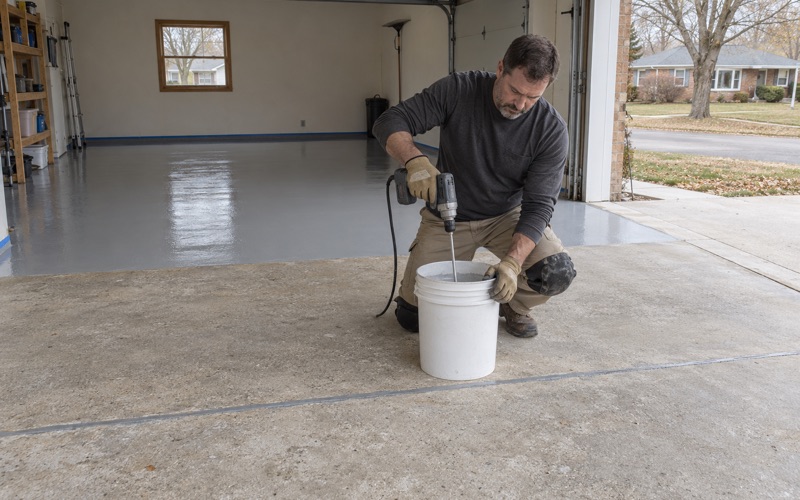
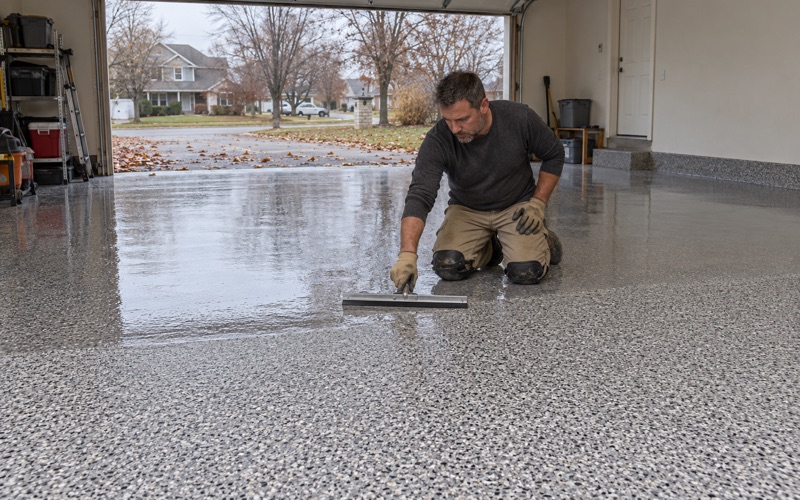
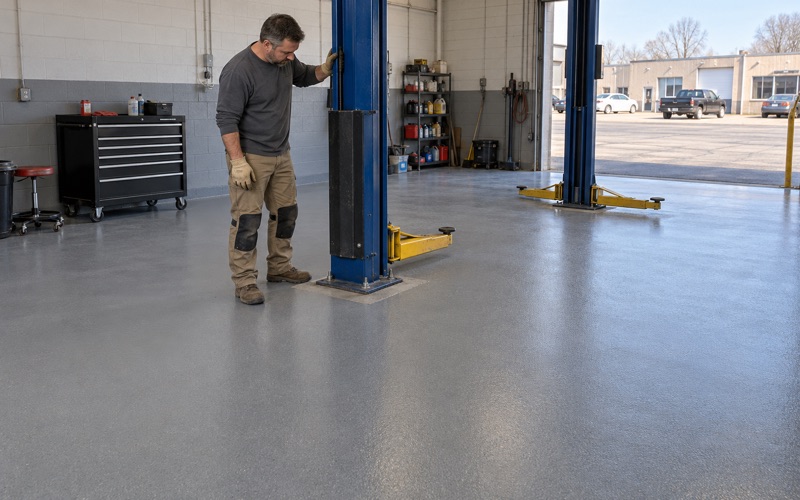
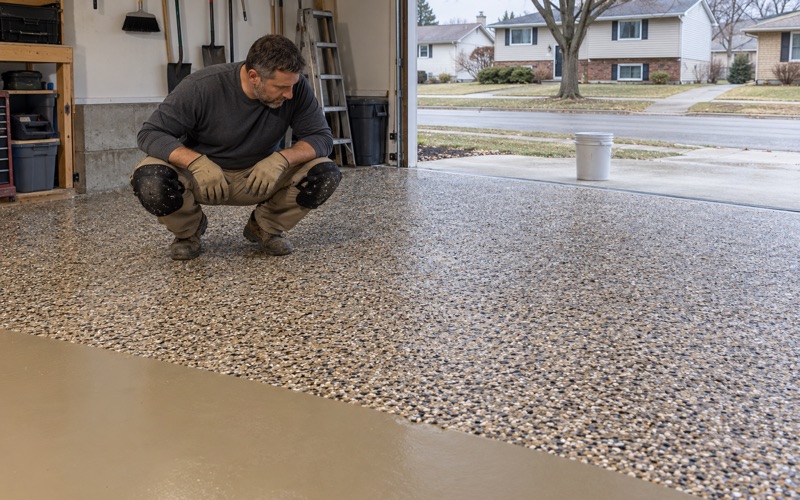
For a garage, that might read as a 100% solids epoxy base, a vinyl flake broadcast and a polyaspartic topcoat, each identified by product. For a basement, it might add a moisture-mitigation primer under the body coat. Either way, the buyer receives a copy of the signed contract before work begins or any payment is accepted, which 110.05 also requires.
Permits Come Up Before Signing
Section 110.03 asks the seller to disclose any permits the job needs before the contract is signed, to hold off on work until they are issued, and to hand over inspection certificates before final payment. Whether a coating job needs a permit from the City of Stoughton is not something we assume in either direction, because replacing a slab and coating one are different questions.
So we ask before the job is scheduled. Building inspection in the city runs through the Department of Planning and Development, which also staffs the Stoughton Landmarks Commission. That commission’s Certificate of Appropriateness covers exterior work on designated landmarks, so it is not the review an interior floor goes through, even in an older house near downtown.
When the Floor Changes the Job
Changes in the Terms Go in Writing
Section 110.05 does not stop at the original contract. It says the contract and all changes in its terms and conditions shall be in writing. On an older Stoughton slab, a change might be an extra crack repair, a patch rebuilt to full depth, or an added primer coat after moisture testing, each of which moves the price or the scope away from what was signed.
When that happens, we stop, explain what the grinder or the meter found, and write the change up before the next step. The owner sees what changed, why, and what it costs, then signs it. That keeps the final invoice from being a surprise, and it keeps both sides working from the same document instead of from memory.
Substitutions Need Written Consent First
Section 110.023 is narrower and just as plain: a seller may not substitute products or materials without the buyer’s prior consent, and where a written contract is required, that consent has to be in writing as well. If the topcoat named in the contract is unavailable, or a different primer suits the slab better, we ask first, on paper.
The rule allows a verbal alteration only in a tight case. The change must add no cost and must not reduce the value of the work, and the seller has to record the name, date, time and description and report it before final payment is accepted. We put it in writing anyway, because a signed note is easier for everyone to find later.
Why Old Floors Make This Matter
A newer slab rarely holds a surprise big enough to change a coating plan. A pre-1940 basement or garage is more likely to, simply because more people have worked on it over more years. That says nothing certain about any one Stoughton house; it is only the reason we build the change process into the quote rather than improvising it on the day the grinder runs.
It also changes how we talk through a quote. We walk the owner through the likely change points on that particular floor, such as a soft patch, a coated corner or a joint that needs a semirigid filler, so a written change order reads as something already discussed rather than a new sales pitch arriving mid-job.
Upkeep and Warranty Terms, Said Before the Sale
What the Rule Says About Upkeep Claims
Section 110.02(2)(a) names a specific misrepresentation: telling a buyer that products or materials need no periodic repainting, finishing, maintenance or other service. A pitch promising a garage floor that will need no care at all is exactly the claim the rule describes. No coating we install fits that description, and we would not say it if one did.
An epoxy and polyaspartic floor still needs sweeping, washing with a neutral cleaner, and attention where hot tire pickup, road salt or calcium chloride brine collects near the door. In a heavily used garage, a topcoat may eventually need a recoat. We explain that at the quote, so upkeep is part of the decision rather than something learned the first spring.
Warranty Exclusions, Named Out Loud
Section 110.04 requires warranties in writing, with their conditions, exclusions and limits on scope and duration stated clearly, and bars a seller from offering a warranty it does not intend to honor in full. We read our warranty exclusions aloud before the job is sold, and moisture is the first one we name, because vapor drive is the failure a dry-looking slab hides best.
The written warranty lists its other exclusions in the same plain terms, right next to what it covers. An owner should be able to read one page and know which problems we stand behind and which ones fall outside the warranty, without waiting for a failure to find out where the line sits.
Curing on a Wisconsin Schedule
Our cure schedule follows slab temperature and the dew point spread at the slab surface, not the calendar. An unheated Stoughton garage in a hard winter may simply have to wait for spring, and we would rather say so than coat a cold slab and watch amine blush or a soft cure undo the work. That timing goes into the written start and completion dates too.
When Stoughton fills up for Syttende Mai on the weekend closest to May 17, many garage jobs are already booked into the warmer weeks around it. Whenever the work lands, the contract, any written change and the warranty exclusions are the same three documents, and the owner holds a copy of each one.
- 20+ Years in Concrete Coatings
- Moisture Testing in Every Scope
- Free Written Estimates